
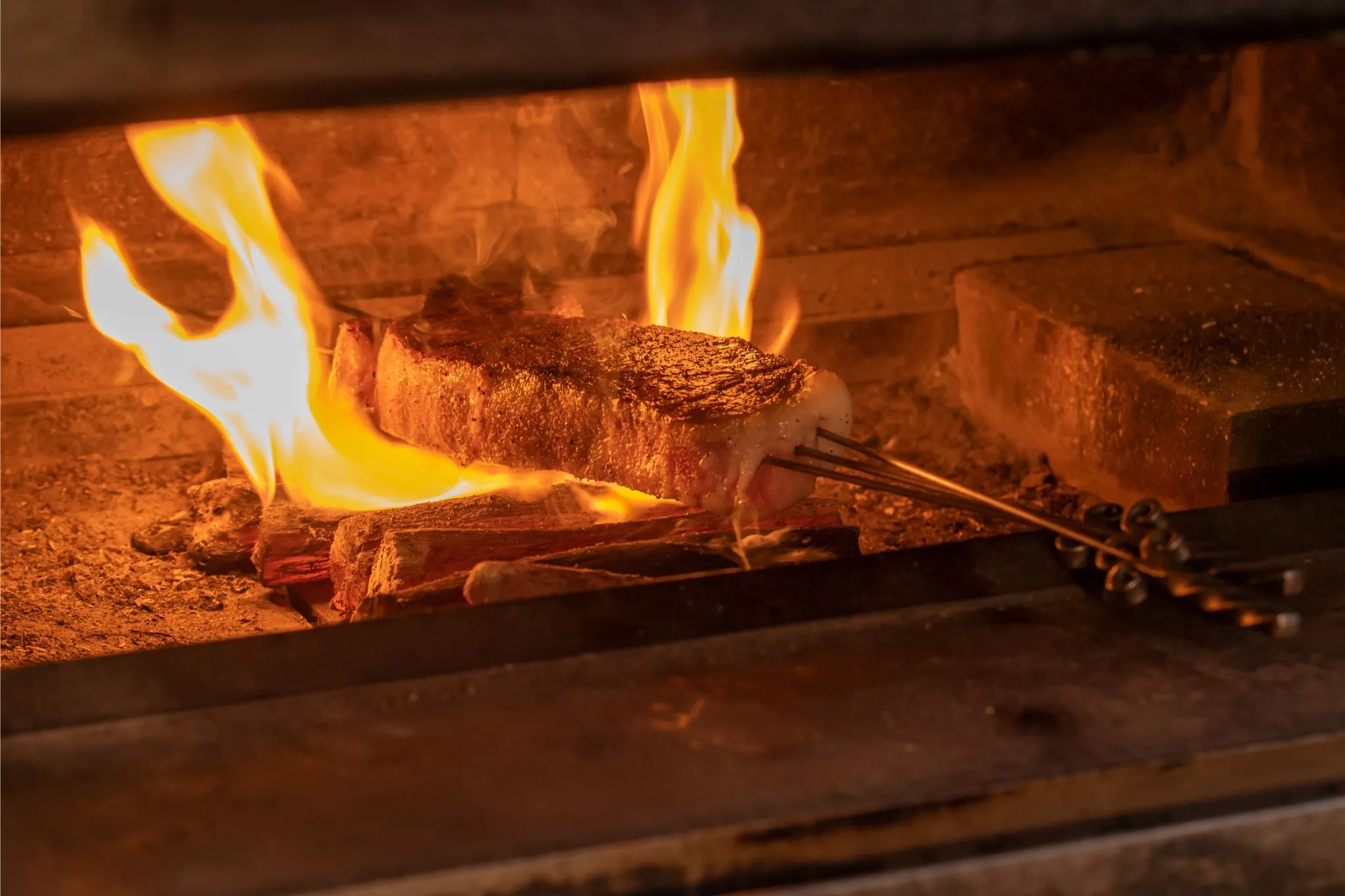
A great steak is shaped by more than the quality of the meat. Heat, timing, seasoning and the cook's judgement all leave their mark. Charcoal adds another dimension: a living heat source that demands constant attention. At Aragawa in Mayfair, our Tajima beef is cooked over Binchotan oak charcoal in a traditional kiln, a method that puts the ingredient and the control of heat at the centre of everything.
What Is Binchotan?
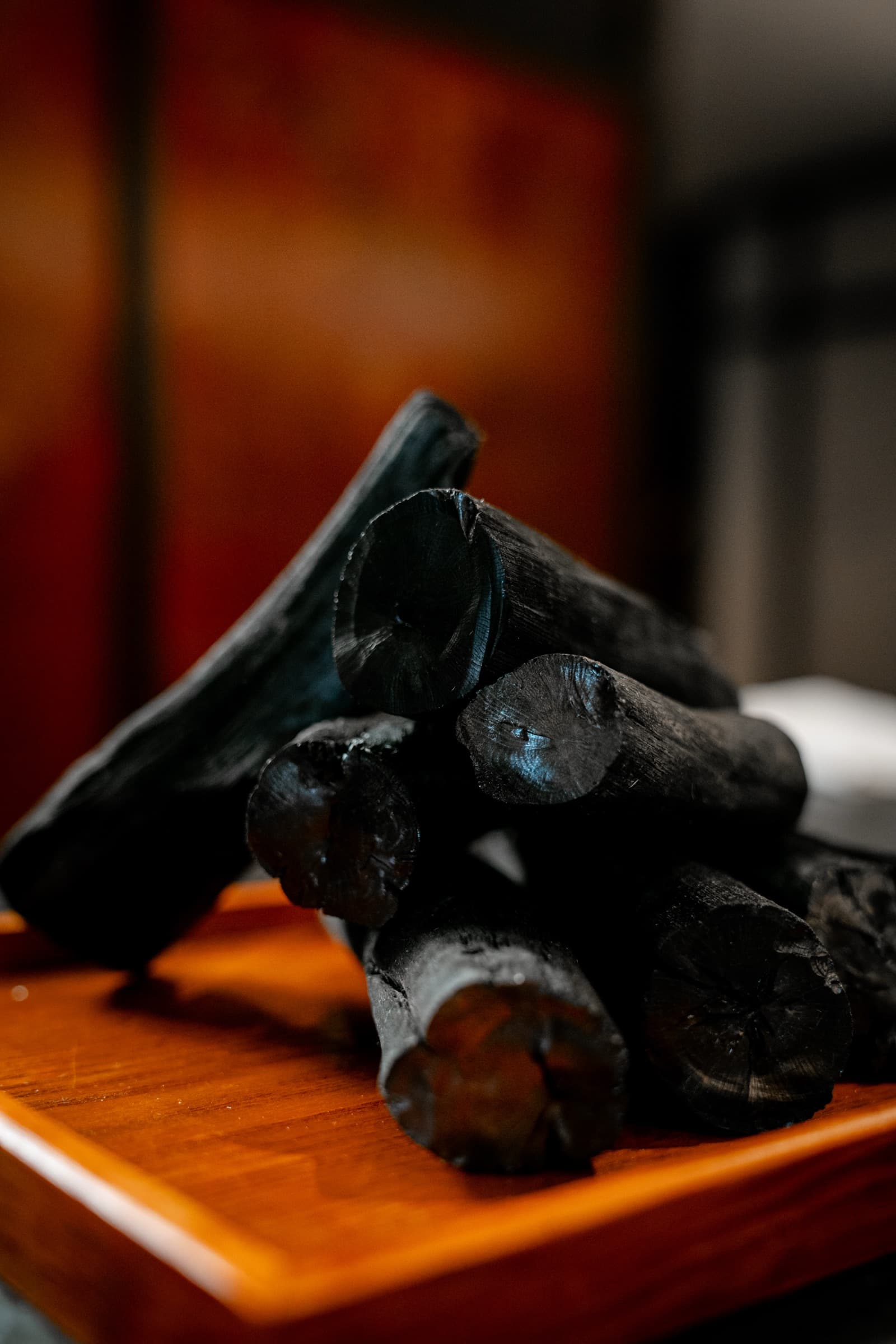
Binchotan is a Japanese charcoal, traditionally made from oak and fired at very high temperatures until it becomes dense, hard and almost metallic. It burns steadily and cleanly, holding an intense heat for a long time when it is properly prepared and tended.
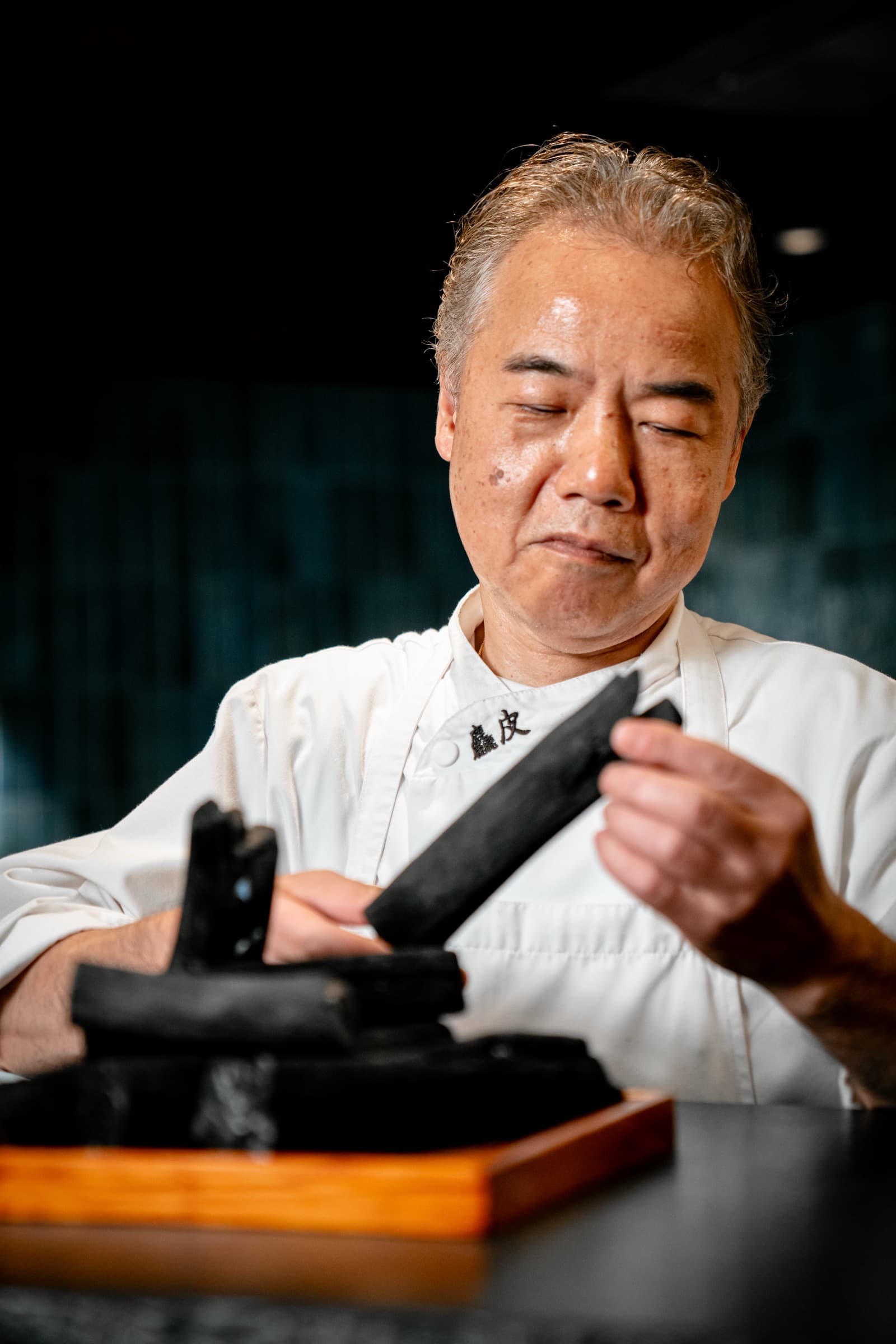
In the kitchen, charcoal is never simply fuel. It creates a very different working environment from gas or electric heat, with radiant warmth, airflow and the arrangement of the embers all changing how the food cooks. Aragawa uses only the highest quality Binchotan oak charcoal, flown in from Japan.
Heat Is a Craft
The outside and the centre of a steak respond to heat at different speeds. The Steak Master has to build a beautiful crust while bringing the inside to exactly the right point. Distance from the embers, their strength and spread, the thickness of the cut and the amount of fat all affect the timing.
No single cooking time suits every steak. A thick, richly marbled sirloin behaves quite differently from a leaner rump. So the Steak Master cooks by sight, sound, touch and smell, not by the clock.
Why the Method Matters for Wagyu
Wagyu's marbling gives it its signature texture and richness. Handled well, the heat browns the surface and draws out deep, savoury aromas while the fat softens through the meat. Handled carelessly, the outside stays pale or the centre goes past the guest's preference. The aim is balance: a well-developed crust and a centre suited to both the cut and the diner.
Charcoal also means managing the fire itself. Embers change as they burn, and the Steak Master responds to them throughout service. It is hands-on work before, during and after each steak meets the grill.
Simplicity on the Plate
After the fire, Aragawa adds only very finely crushed Maldon salt and ground pepper. The beef stays the main subject, and the quality of the cooking becomes plain to see, with no competing flavours to hide behind. We explore this idea further in why simplicity is the ultimate luxury.
Simplicity is not the same as a lack of sophistication. A restrained dish depends on careful choices, from selecting the right cut to deciding exactly how it should be cooked. When every element has a purpose, the result feels both direct and refined.
See the Craft for Yourself
For anyone curious about the bond between ingredient and technique, the fire is part of the story. Ask our team about the current Tajima beef selections and how they recommend enjoying each cut.
Aragawa is at 38 Clarges Street, Mayfair. Reserve your table to taste Tajima beef cooked over Binchotan, or contact the team about private dining for 8 to 14 guests.
Frequently Asked Questions
What is Binchotan charcoal?+
Binchotan is a dense, high-quality Japanese charcoal traditionally made from oak. It burns steadily and cleanly at high heat, which makes it ideal for grilling.
Why does Aragawa cook steak over charcoal rather than gas?+
Charcoal gives a radiant heat that builds a deep crust and savoury aroma while letting the Steak Master control the centre precisely. It suits richly marbled Tajima Wagyu particularly well.
How is the steak seasoned?+
Simply, with very finely crushed Maldon salt and ground pepper, so nothing distracts from the beef.