
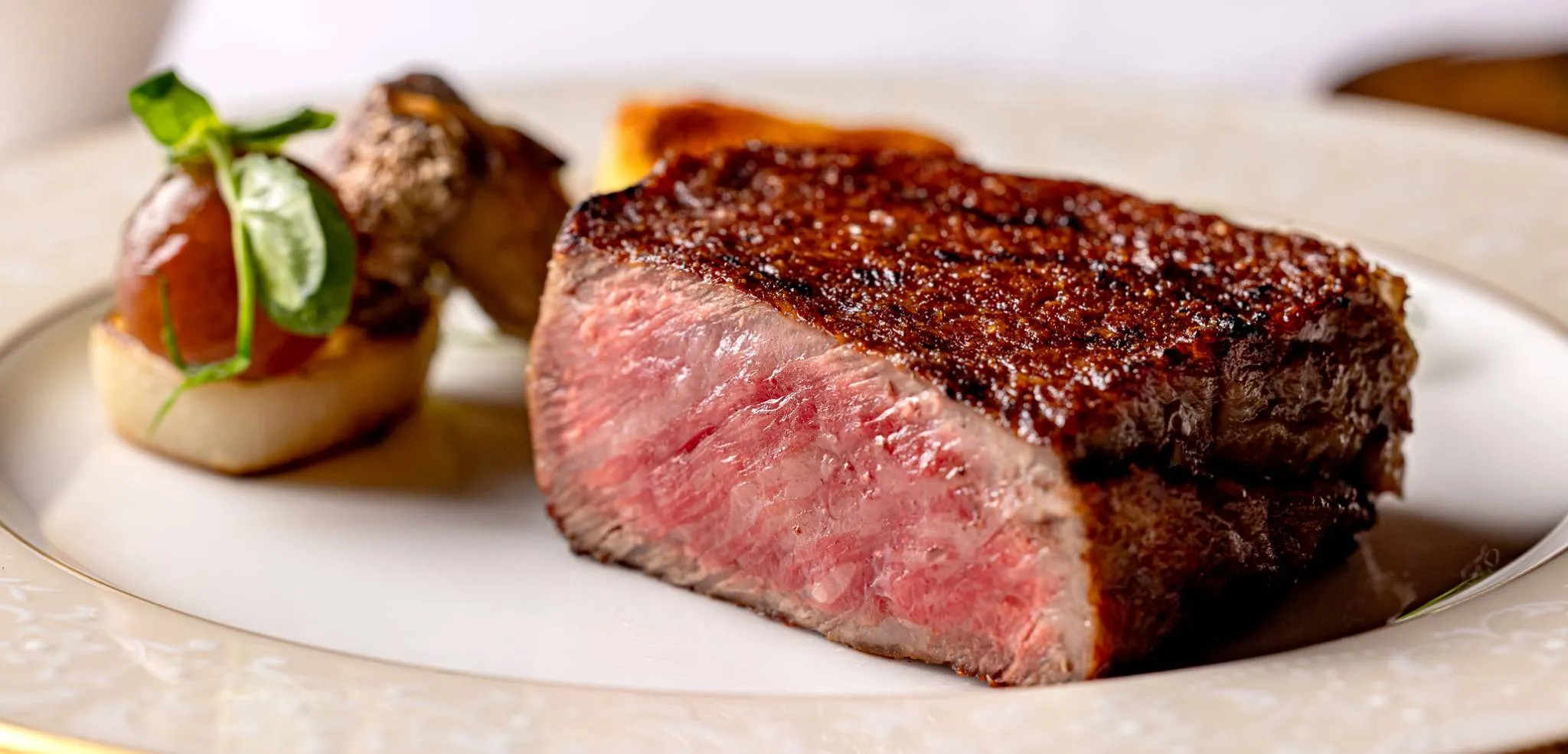
Choosing a steak is not only about the cut. It is about the kind of experience you enjoy: a fine, delicate texture, a pronounced beef character, a rich mouthfeel or a balance of all three. With Tajima beef, the cut can shape the experience as much as the marbling itself.
Aragawa's à la carte menu offers Tajima Wagyu from several Japanese farms, each listed with its farm, cut and age. This guide explains the broad differences so you can order with confidence.
Sirloin: Balance and Character
Sirloin is the choice for diners who want both a satisfying beef flavour and generous marbling. In Tajima Wagyu, the marbling makes the texture especially luxurious while the meat keeps a distinct steak character.
It is the ideal place to start if you want to understand how flavour and marbling work together. Our menu currently offers sirloin from more than one farm, including Okazaki and Nishizawa, which makes for a fascinating comparison: the same cut, from two producers, can taste remarkably different.
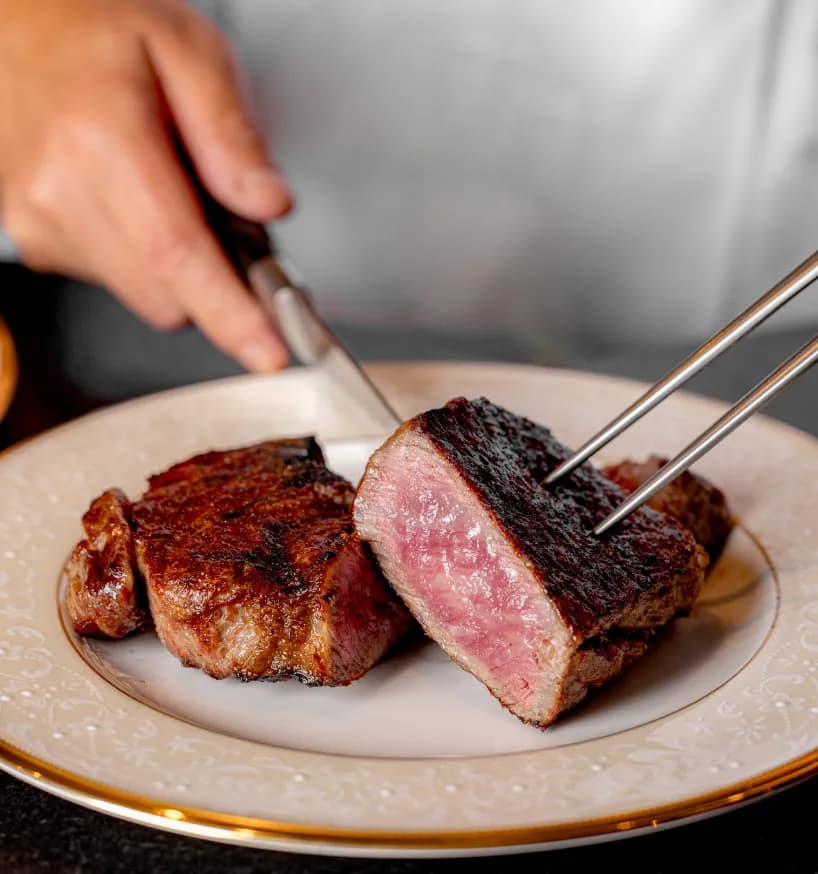
Rump: A More Robust Profile
Rump has a firmer texture and a more pronounced beef flavour. For many diners that makes it an appealing contrast to cuts known mainly for tenderness, and in well-marbled Tajima beef it still carries considerable richness.
Our menu has featured rump from Tamada Farm. If you like a steak with a little more bite, ask whether a rump selection is available and how the team would describe it that evening.
Tenderloin: Prized for Tenderness
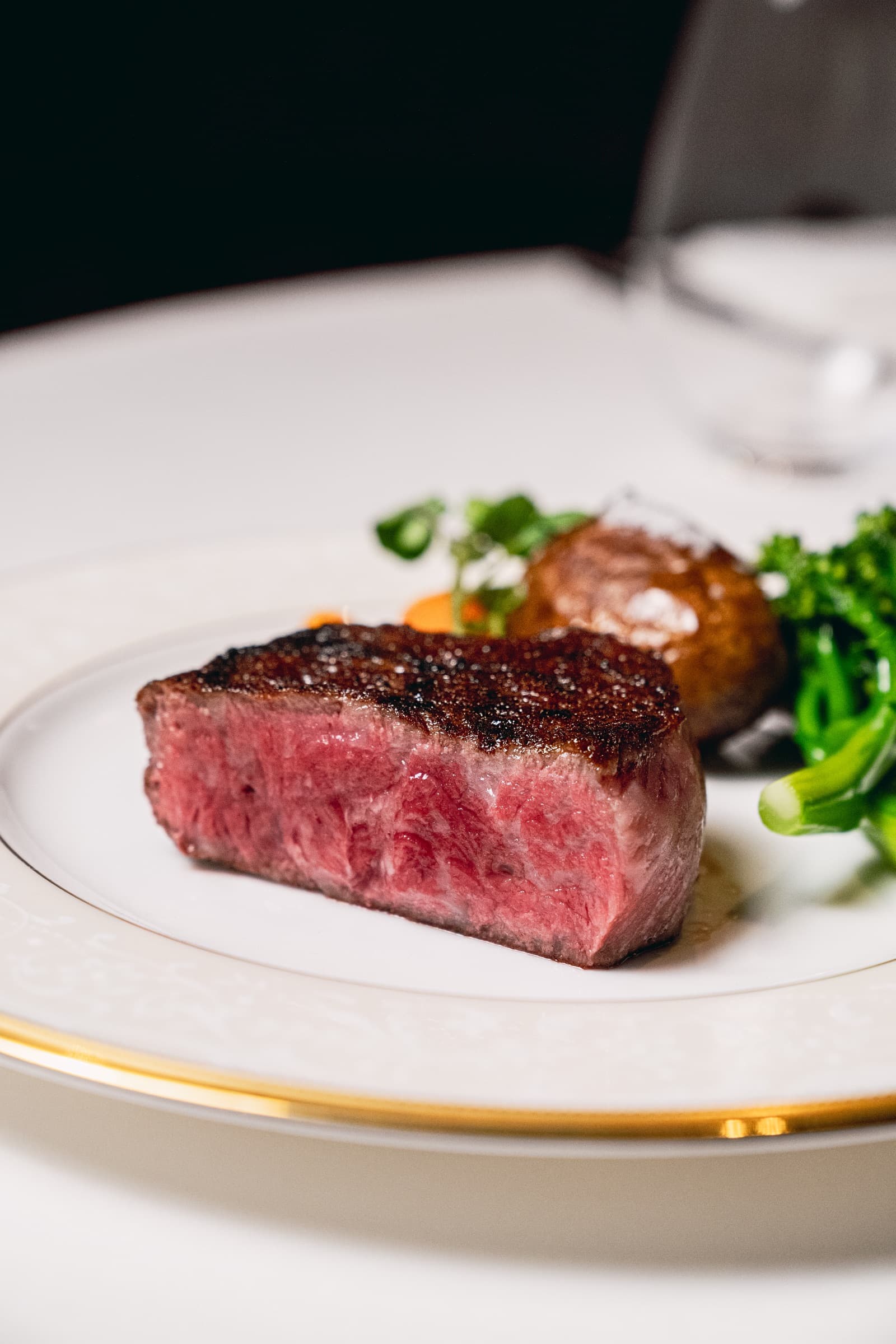
Tenderloin is a muscle that does very little work, which is why it is so famously tender. It is often less overtly beefy than other cuts, with a softness that melts away. It suits anyone who values delicacy over a firmer, more muscular texture.
Our menu has offered tenderloin and Chateaubriand from Okazaki Farm. Marbling varies from cut to cut and animal to animal, so rather than assuming one is always richer than another, ask about the selection on the night.
Farm and Age
Farm and age information helps you understand a particular steak, but a bigger number is not automatically a better steak. It is one part of a story that also includes the producer, the cut and the cooking. Our team will happily explain anything unfamiliar on the menu.
How to Choose Your Steak
Before ordering, ask yourself three questions:
- Do you prefer a fine, tender texture or a more substantial bite?
- Do you love pronounced richness, or a balance between marbling and clear beef flavour?
- Would you like to compare two cuts or two farms side by side?
There is no wrong answer. The best steak is the one that matches your taste and is cooked with care, and trying something new is part of the pleasure. Our Steak Master recommends around 200 to 250g per guest.
Explore the Selection at Aragawa
Because the selection changes, the menus and our team are the best guide to what is available today. Dining with others? Ask about sharing two different cuts so the table can compare.
Reserve a table at Aragawa in Mayfair and let us guide you through the current Tajima beef. For a more tailored gathering, explore private dining for 8 to 14 guests.
Frequently Asked Questions
Which Wagyu cut is the most tender?+
Tenderloin is usually the most tender, because the muscle does very little work. Sirloin is richer and more balanced, and rump has a firmer bite with a more pronounced flavour.
Which cut should I try first?+
Sirloin is a lovely introduction, as it balances marbling with clear beef character. If you are dining with someone, ordering two cuts to share is a good way to compare.
Can I compare steaks from different farms?+
Often, yes. Our menu sometimes offers the same cut from more than one farm. Ask the team what is available on the evening.