
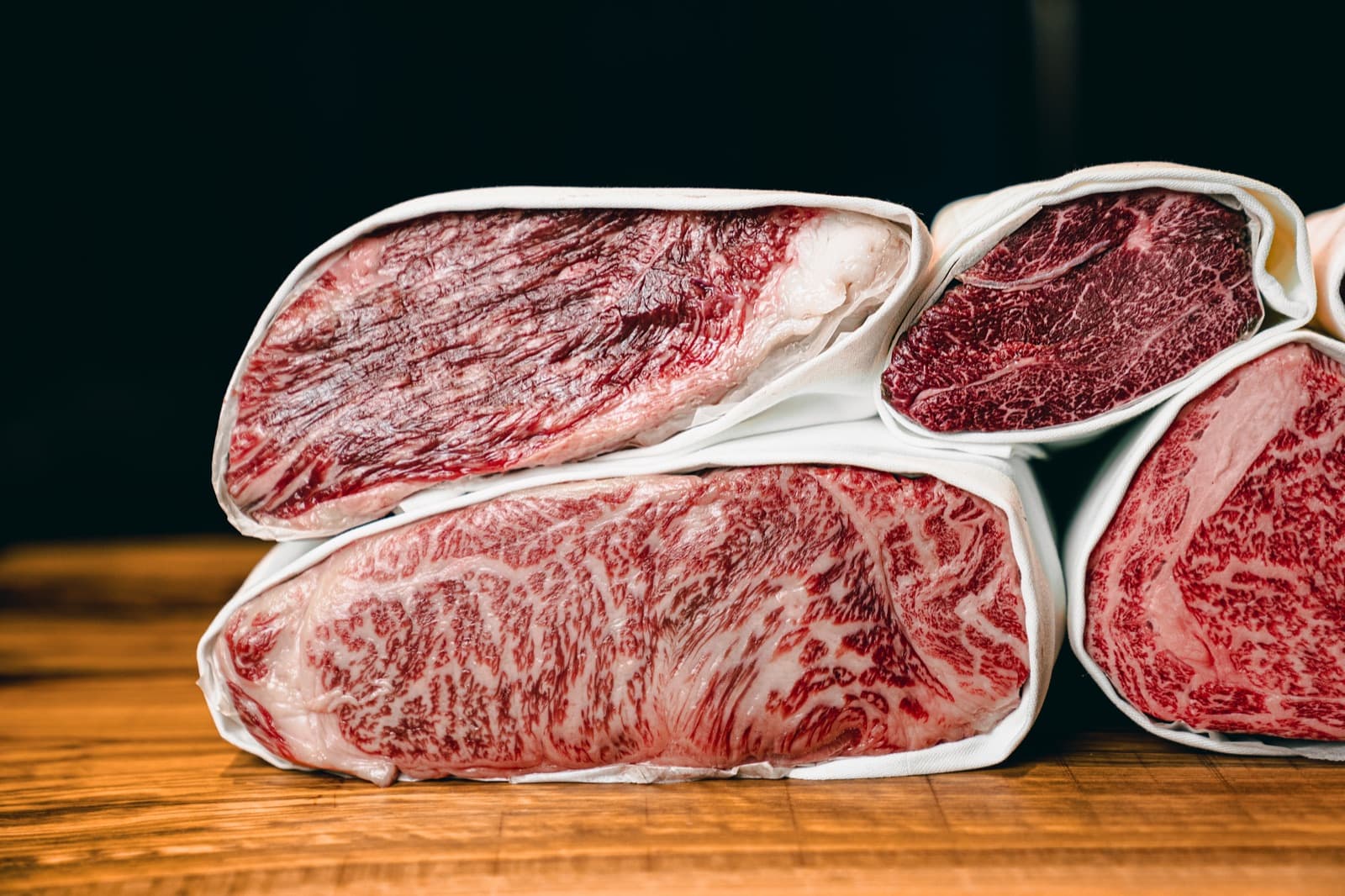
Some ingredients need very little help. Their distinction lies in where they come from, how carefully they are chosen and the skill with which they are cooked. Tajima beef is one of them: a celebrated line of Japanese cattle from Hyogo Prefecture, prized for its fine marbling, its texture and its depth of flavour. At Aragawa in Mayfair, it is the reason we exist.
What Is Tajima Beef?
Tajima cattle are a strain of Japanese Black cattle from Hyogo, in the Kansai region of Japan. The line is so highly regarded that it forms the foundation of Kobe beef: every Kobe steak begins with a Tajima animal raised in Hyogo.
That matters because provenance is more than a name on a menu. It connects the beef to a particular farming tradition, a regional identity and a set of standards built up over generations.
Why Marbling Matters
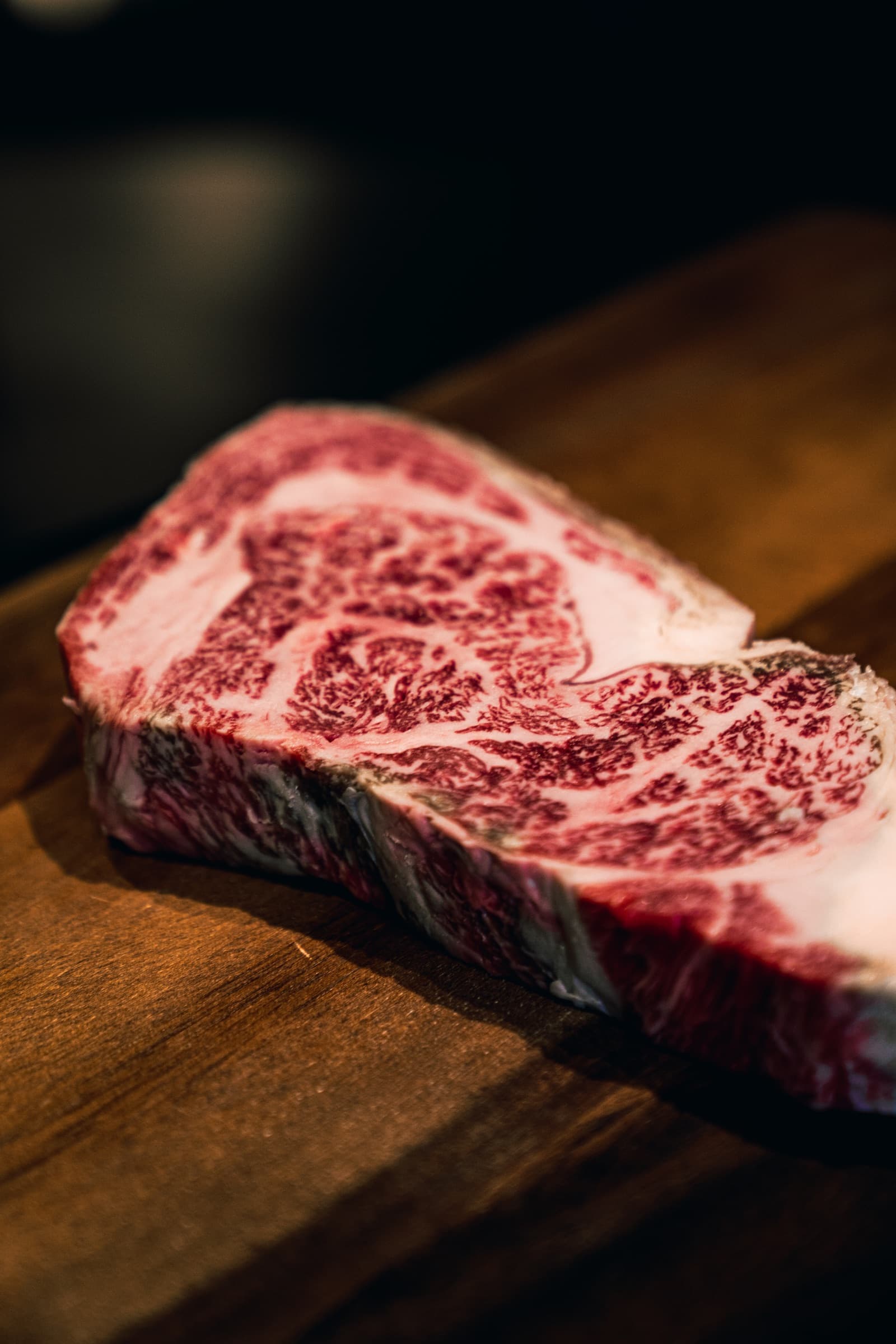
The feature most associated with premium Wagyu is marbling: fine threads of intramuscular fat running through the meat. As the steak cooks, that fat melts into the muscle, bringing juiciness, aroma and a soft, yielding texture.
Richness alone is not the goal, though. The balance between fat, meat, seasoning and heat decides whether a steak tastes harmonious or heavy. Lineage, the way the animal is raised, the individual cut, handling and cooking all play their part. A memorable steak is the sum of these things, never a single visual trait.
The Importance of the Cut
Each cut offers a different experience. Sirloin balances beef character with marbling; tenderloin is prized for its fine, delicate texture; rump brings a firmer bite and a more pronounced flavour. Individual animals vary, which is why our menu names the farm behind each steak. Our guide to choosing between sirloin, rump and tenderloin goes into more detail.
A Philosophy of Restraint
Beef of this quality does not need a complicated plate. When an ingredient has such a clear identity, the cook's job is to respect it: manage the heat with care, season with a light hand and never mask its natural character. At Aragawa, every steak is grilled over Binchotan oak charcoal in our traditional kiln and seasoned only with finely crushed Maldon salt and ground pepper.
Restraint is not an absence of technique. It puts more weight on every decision, from choosing the cut to timing the cook. A simple plate is often the result of considerable judgement.
Discover Tajima Beef at Aragawa
If Japanese Wagyu is new to you, a meal at Aragawa is a chance to explore it with expert guidance. Our team will talk you through the current farm selections, which currently include Okazaki, Tamada and Nishizawa farms, the differences between the cuts and the way each one is best enjoyed. You can read more on our Tajima Beef page.
Aragawa is at 38 Clarges Street, Mayfair, carrying its Tokyo heritage to London. Reserve a table to taste Tajima beef for yourself, or, for a gathering of 8 to 14 guests, discover our private dining room.
Frequently Asked Questions
Is Tajima beef the same as Kobe beef?+
Not exactly. Kobe beef comes from Tajima cattle raised in Hyogo Prefecture that meet a strict certification standard. All Kobe beef is Tajima beef, but not all Tajima beef is sold as Kobe.
Where does Aragawa's Tajima beef come from?+
Our Tajima Wagyu is sourced directly from select farms in Japan. The current menu names each farm, including Okazaki, Tamada and Nishizawa, alongside the cut.
How much Wagyu should I order per person?+
Our Steak Master recommends 200 to 250g per guest. The team will be happy to help you decide on the evening.